FDA Cleared
Cranial Navigation
Cranial navigation
First and only
FDA-cleared AR system for Cranial Neurosurgery
Catheters, shunts, and craniotomies. Registered in seconds, at the bedside or in the OR.
In the surgeon’s view
Standard navigation plus AR-guidance
Everything the navigation system shows on the workstation — the imaging, the tracked instrument, the planned trajectory — can be seen in the glasses too, locked to the patient in front of you.
Everything displayed when you want it, where you need it — so you can focus on the patient.
The problem
1 in 3 ventricular catheters are misplaced.
Studies show misplacement can increase morbidity, complications and length of stay.
Navigating the catheter on the patient’s own imaging, with the trajectory visible where the surgeon is looking, is a direct answer to a long-standing problem.
Old standard of care.
Blindly advance catheter into the brain.
New standard of care.
See the invisible with AR navigation.
Sources: External ventricular drain insertion accuracy — is there a need for change in practice?; The risk of ventricular catheter misplacement and intracerebral hemorrhage in shunt surgery for hydrocephalus
Precision at the bedside
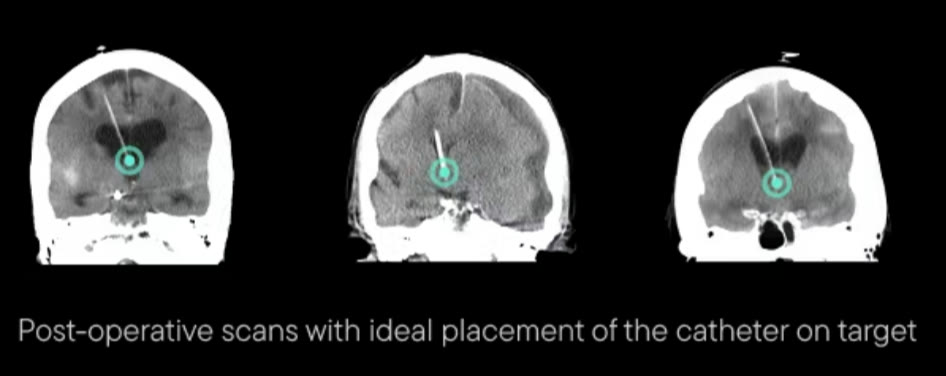
5X improved accuracy
versus conventional free-hand placement.
What you can do
From EVDs at the bedside to craniotomies in the OR
A lightweight, portable system that integrates with existing tools and setups.
External ventricular drains
Advance the catheter into the ventricle on a navigated trajectory instead of by landmarks alone.
Subdural drains and shunts
The same registration and tracking for catheter placement across cranial procedures.
Craniotomies
Plan the corridor in Studio and see it on the head in the room.
The OR Solution
Compact NVIDIA-powered workstation with precise hybrid infrared tracking for use with or without AR. Seamless integration with imaging systems and hardware.
The Bedside
Lightweight, portable system suitable for the ICU, PACU, Trauma Bay, ED, or IR — no bulky workstation or external monitors required.
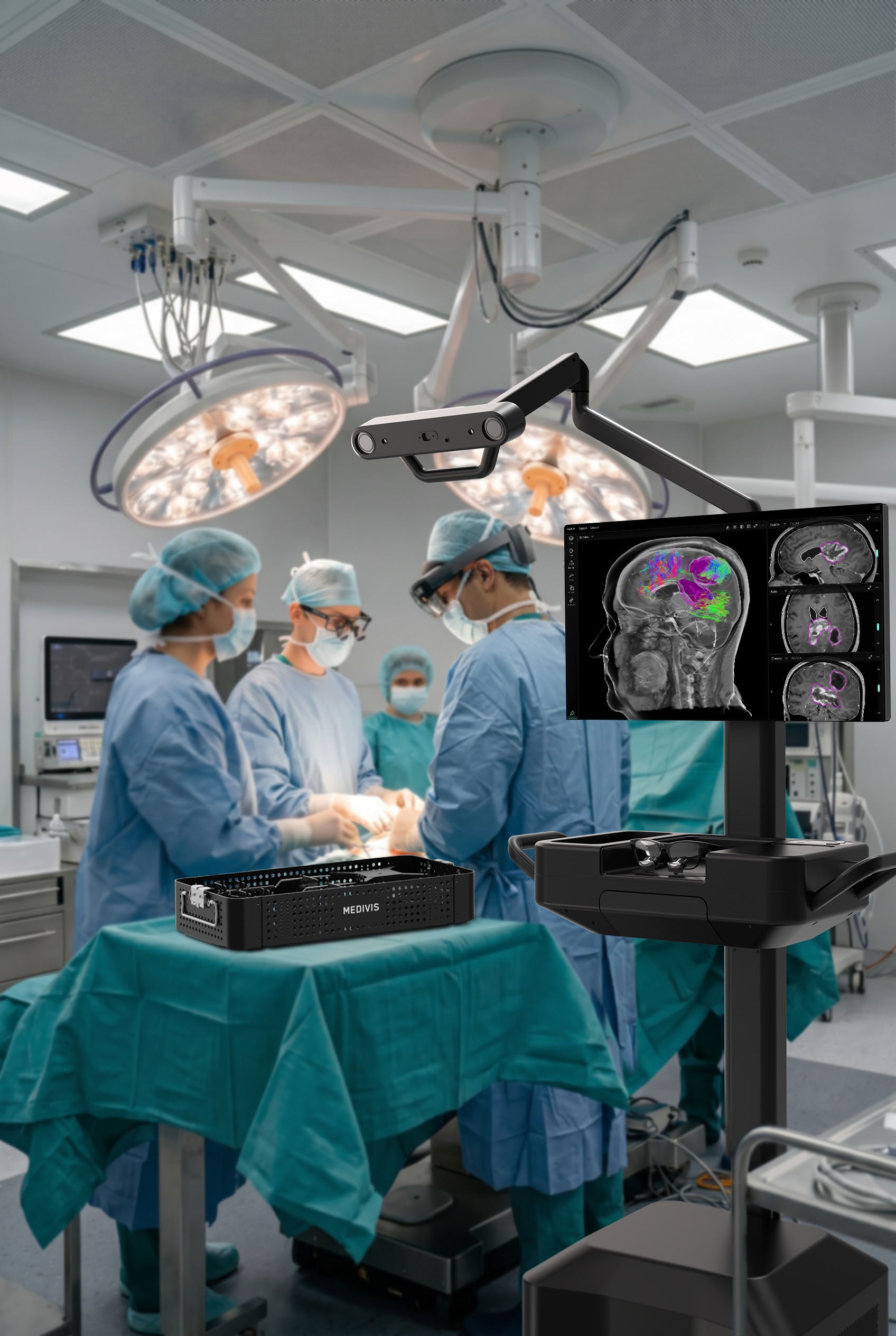
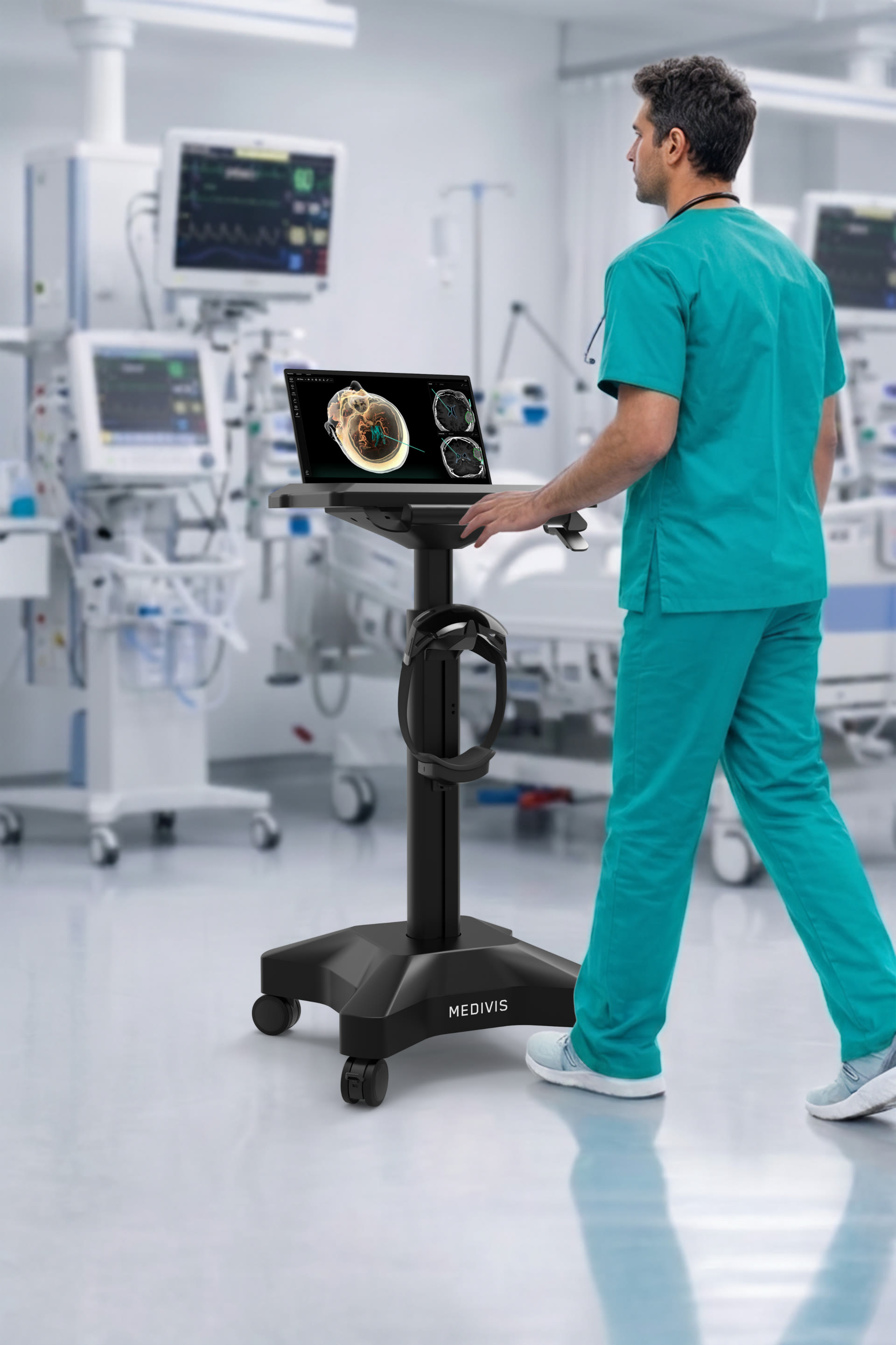
Surgical intelligence in the OR, at the bedside
Built for speed and confidence.
Automatic segmentation
Segment levels and key anatomy with a click. Have full control over the 3D models by carving out exactly what matters.
Intuitive workflows
Procedure-specific models to increase speed and efficiency. 10 secs from patient search to hologram with automatic image processing.
Automatic registration
Register precisely to the patient in seconds, reducing overall procedure time.
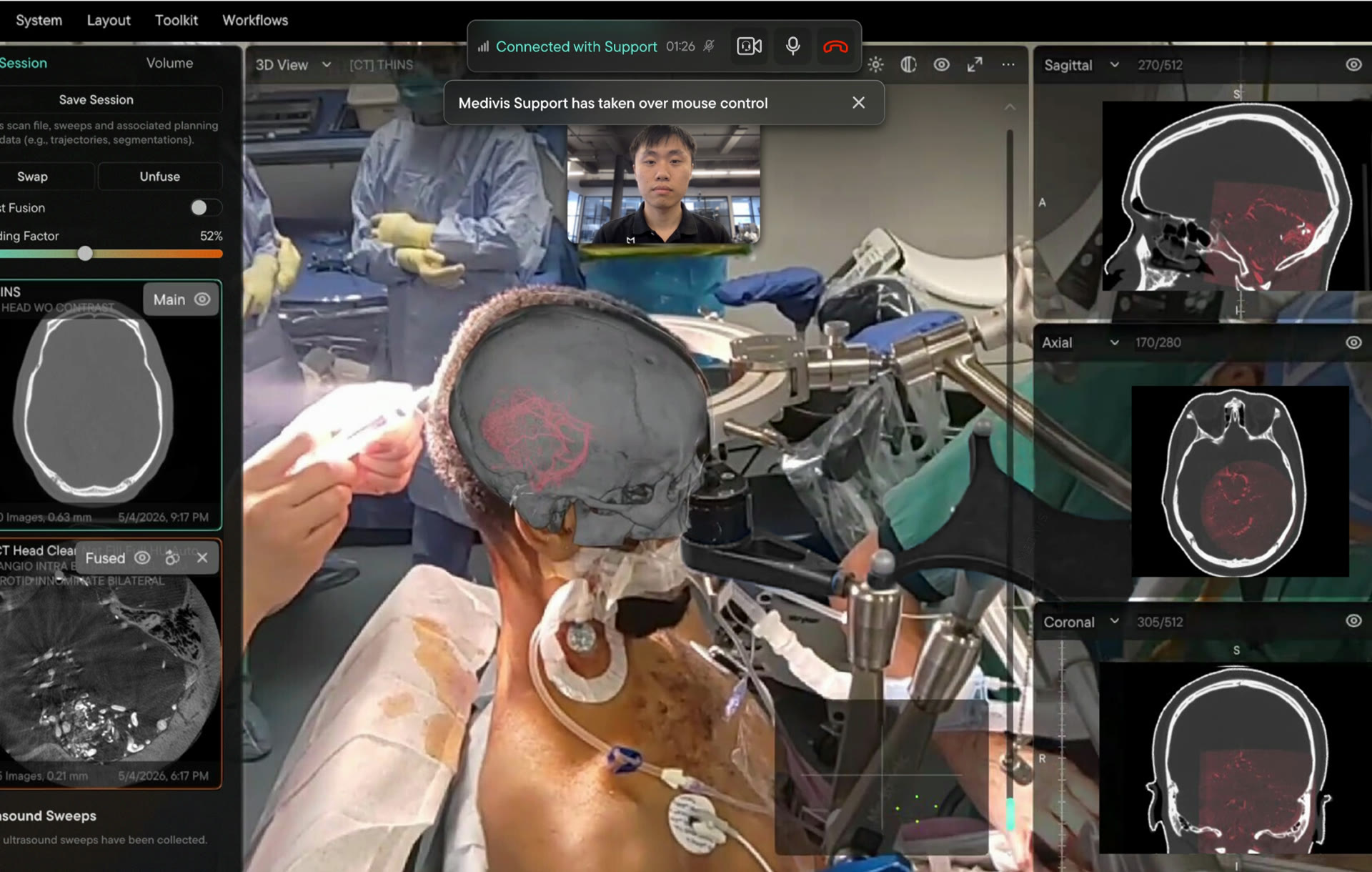
Remote support
One-click access to live support to enable remote collaboration with minimized procedural disruption.
Proven in practice
Trusted where it counts.
3,000+
Surgeries performed with Medivis
50+
Deployments (clinical & educational)
50+
Patents (granted and pending)
Fast Company Innovation by Design Award 2026 | Core77 Medical Design Award Winner 2026 | Fast Company Most Innovative Company 2024 | Edison Award 2024 Finalist | TIME Best Inventions 2023
As seen in




“Augmented reality is a disruptive technology that has just begun to change how we practice neurosurgery. Medivis is at the forefront in this industry, leading the way with their innovative and thoughtful approach to AR integration into healthcare.”

Edward G. Andrews, M.D.
Attending Neurosurgeon, Department of Neurosurgery, University of Pittsburgh Medical Center
Let’s talk about your practice
Reach out to learn more and try Medivis Studio for yourself.
